Designing process-water systems for reliable production
Key considerations for RO/DI capacity, monitoring, redundancy and maintainability.

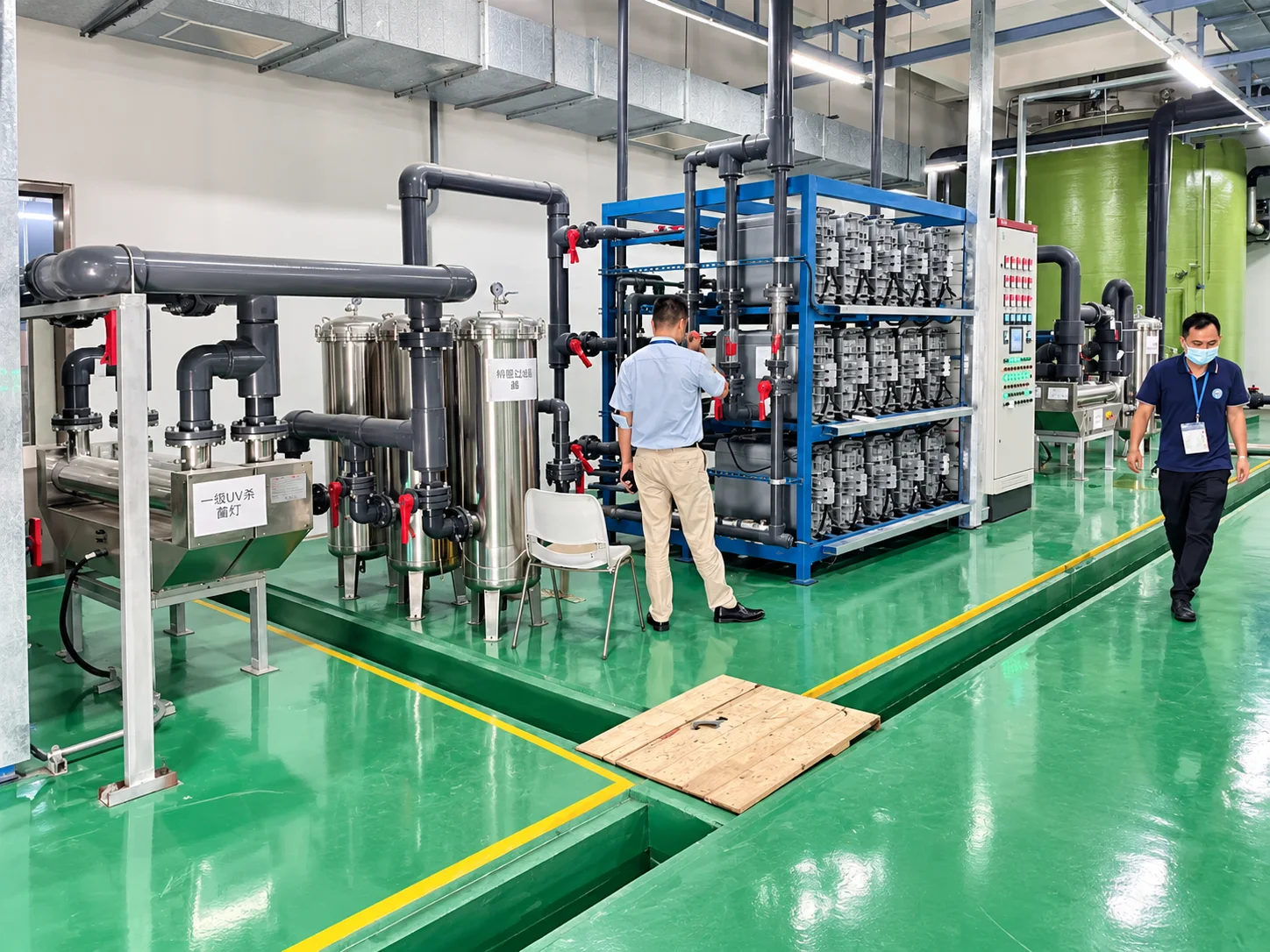
Key considerations for RO/DI capacity, monitoring, redundancy and maintainability.
A reliable plating line depends not only on the process tanks, but also on a stable and properly designed water system.
Different process stages may require different water quality. Raw water, RO water, DI water and recycled rinse water should be allocated according to actual process needs.
Tank filling, continuous overflow, rinse replacement and production frequency should be calculated to determine the required treatment and storage capacity.
Pipe sizing, pressure, flow rate and distribution routes should be designed to provide stable water supply to all required process points.
Counter-flow rinsing, multi-stage rinsing and controlled overflow can reduce water consumption while maintaining product cleanliness.
Conductivity, resistivity, flow, pressure and tank level can be monitored to maintain stable water quality and identify abnormal conditions.
Where suitable, rinse water can be recovered and reused. Different wastewater streams should also be separated according to their chemical characteristics and treatment requirements.
A properly designed process-water system helps maintain consistent production quality, reduce water consumption and support reliable long-term operation.
Share your process and project requirements with the ES-PRO engineering team.

AI-assisted guidance. Final specifications are confirmed by ES-PRO engineers. · Your conversation is saved on this device. privacy policy